Recently in Family-based visas Category

February 6, 2012

Circuit Court to Announce Prop. 8 Decision on Tuesday

Thumbnail image for rainbow_flag.gifThe issue of same-sex marriage is an important issue. The immigration law offices of Fong & Chun gets questions all the time at our offices in Los Angeles and Palm Springs, and throughout the nation from US citizens who wish to immigrate a same-sex spouse. The Los Angeles Times is reporting that the US Court of Appeals for the Ninth Circuit in San Francisco, California will release its decision regarding the constitutionality of Marriage Equality and Proposition 8 on Tuesday, 7 February 2012 at 10:00 a.m. (PST).

At Fong & Chun, we are counseling our clients that whether the decision is a positive one or not, couples should not submit I-130 Family Petitions and I-485 Applications for Adjustment of Status based on a same-sex marriage without first consulting with an immigration attorney experienced in working with non-traditional families. --jcf

January 6, 2012

Proposed Change May Allow Immigration Waiver for Undocumented

changes ahead.jpgThe Obama Administration has proposed a change in immigration regulations which would potentially change the lives of undocumented immigrants in the USA.

Maybe the most common problem we see as immigration lawyers is the person who entered the USA with no documentation, or who had a visa but overstayed -- the so-called "undocumented alien." This problem is enormous and affects our clients throughout the nation, not only those at our Fong & Chun offices in Los Angeles or Palm Springs.

This is very complicated, so please read carefully:

(1) With few exceptions, an undocumented alien can only interview for a green card by going back to his/her home country to have an interview at the US Embassy. The CATCH is that when someone like this departs the country, s/he triggers a ten-year bar, and s/he will not be allowed to return for ten years, even if s/he otherwise qualifies for the green card.

(2) There is one exception to this bar: if the undocumented alien goes to the interview and is barred from coming back to the USA, the applicant can file a "waiver," explaining that some US citizen (or legal permanent resident) will suffer "severe Hardship" if the applicant is not allowed to return. At this time, the waiver can only be filed at the US Embassy at the time of the applicant's interview. The means that the applicant ends up waiting abroad for months waiting for a decision. If the waiver is NOT granted, the applicant cannot return.

(3) If this regulatory change is approved, the Obama Administration would allow the applicant to apply for this waiver BEFORE the applicant leaves to the home country. This would be an enormous benefit. If the waiver is granted, the applicant goes to the Embassy interview and comes back, no 10-year bar. If the waiver is NOT granted, then the applicant just stays put in the US, and avoids going home to be denied and excluded.

This is not an amnesty.

This proposed change allows those who can be legalized to get a green card through the regular immigration process. The only change would be applying for the waiver before departure from the USA. The impact of this small change would have an enormous impact on individuals and families in Los Angeles and throughout Southern California. Right now, this is only a proposal -- it is NOT YET IN EFFECT.

The lawyers at Fong & Chun have talked to hundreds if not thousands of people over the years who can benefit from this potential change. Stay tuned. As soon as this change goes into effect, we will be post additional information. --jcf

October 11, 2011

What Happens When a Family Petitioner Dies?

headstones.jpgLately, the attorneys at the immigration law office of Fong & Chun have been fielding a number of inquiries from families about what to do when their petitioner passes away. These inquiries have been especially common from our offices in Los Angeles and Palm Springs. Clients will usually ask if there is a way that they can obtain a substitute sponsor. This is known as requesting "humanitarian reinstatement" of the petition from the U.S. Citizenship & Immigration Services, or USCIS.

For example, a father became a naturalized citizen in 1996 and then immediately filed a petition for his adult son in the Philippines. Although the petition was quickly approved, the priority date would not become current for many years due to the backlog and demand for visas. This delay is due to the Priority Date system used by USCIS and Department of State to determine who is next-in-line. Unfortunately, during the waiting period, the father passed away. Under current regulations, an approved petition is automatically revoked upon the death of the petitioner. The surviving members of the family reside in the United States. Certain members of the family would be eligible to be the substitute sponsor for purposes of the affidavit of support, but the first step would be to request that USCIS reinstate the petition.

In order to do so, USCIS considers the following factors:

(1) Disruption of an established family unit; (2) Hardship to Citizens and lawful permanent residents; (3) A beneficiary who is elderly or in poor health; (4) A beneficiary who has had lengthy residence in the United States; (5) A beneficiary who has no home to go to; (6) Undue delay by USCIS or consular officers in processing the petition and the visa; and (7) a beneficiary who has strong family ties in the United States.

Prior to submitting a request, clients should work closely with their attorneys to assemble a strong evidentiary package that addresses each of the factors that USCIS considers. Bear in mind: the decision to reinstate a petition is completely within the discretion of USCIS. Humanitarian reinstatement applies to beneficiaries outside the United States. Beneficiaries residing inside the United States when the petitioner passes away may be able to avail themselves of Section 204(L) of the Immigration and Nationality Act. The attorneys at Fong & Chun are always available to help guide you through this process. --ra

October 6, 2011

The World Mourns Steve Jobs

Green apple standing out.jpgToday the world mourns Steve Jobs. Steve Jobs was the creator and visionary at Apple, Inc. but he is remembered as one of the world's greatest business leaders, ranking up there with the likes of Ford and Rockefeller. Steve Jobs was credited for bringing technology and it's benefits to the every day lives of every day people. The attorneys at Fong & Chun, LLP want to thank Steve Jobs for changing how we think about technology, for inspiring us to think creatively in what we do as immigration attorneys.

Fong & Chun, LLP is proud to run our office on Apple technology. We love our Apple computers, iPhones and iPads. But more importantly, the immigration attorneys at Fong & Chun have also embraced the entrepreneurial spirit and determination which is best exemplified by Steve Job's own words:

Your work is going to fill a large part of your life, and the only way to be truly satisfied is to do what you believe is great work. And the only way to do great work is to love what you do.

As immigration lawyers, we know that the law allows families to reunify, it gives foreign workers and entrepreneurs a chance to realize their dreams. What we do at Fong & Chun gives people a chance in a lifetime to make a change for the better. Many, many of our clients come to us after other immigration attorneys have turned their cases away hearing their employers were too small, too new to sponsor an H-1b or that a new company L-1 is just impossible these days. Or perhaps their family members were facing removal or in desperate need of an immigration waiver but that odds were against them so that it wasn't worth trying. At Fong & Chun, we don't provide formulaic solutions to challenges. Steve Jobs didn't do that and neither do we. Challenging cases require exacting solutions. We work on each case with the individualized attention that each case deserves and we have the years of experience to know what works and what does not. When other immigration attorneys won't make the extra effort to take on cases that are outside the norm, we do - because this is what makes our work meaningful, and this is what inspires us to create great work and to make a difference, a world of difference to the individuals who didn't settle and tried anyhow. --ecf

September 27, 2011

DV Lottery Begins October 4, 2011

Opportunity in the sky.jpgFollowing this past year's diversity lottery fiasco, the US Department of State has announced that it will begin accepting applications for DV 2013 at noon (EDT) on October 4, 2011. The application period will close on November 4, 2011 at noon (EDT).

It has only been a few months since Dept of State notified then revoked the winning results of 22,000 "winning" lottery applicants. In the incident, now commonly known as "22,000 tears," the DOS reported that a computer glitch caused 90% of the DV2012 winners to be selected from applications made during the first 2 days of the 30-day application period, and that because of this, the results were not "randomized," and hence, invalid. DOS states that it "mistakenly informed" these unfortunate 22,000 "winners," some of whom had already started making plans and selling off assets to move to the US and begin their American Dream.

As we look ahead, some changes have been made to the countries whose nationals can now participate in the DV 2013 lottery. Nationals of South Sudan and Poland are now eligible to submit applications and although mainland Chinese born applicants cannot participate, Hong Kong SAR, Macau, and Taiwanese applicants may still apply. While the Los Angeles visa attorneys at Fong & Chun, wish the best of luck to all DV 2013 applicants, we also remember and sympathize with the 22,000 individuals of DV 2012. --ecf

June 27, 2011

New York: "I do!" -- USCIS: "Not yet, pal!"

couple hold hands.jpgCongratulations to the citizens of New York for the practical and humane approach taken by their Legislature and Governor in the approval of same-sex marriage last week! As leading advocates for immigrants in the gay and lesbian community, the attorneys at Los Angeles' Fong & Chun have counseled thousands of clients from all over the nation and the world about uniting families which are not traditionally shaped.

Beware! It is still NOT possible for same-sex couples to marry and to have the US citizen spouse petition for legal permanent resident status (the so-called green card) for the foreign spouse. This prohibition applies even when the couple both marries and resides in New York.

A same-sex marriage in New York (or from any other state or country, for that matter) will not be recognized for purposes of Federal immigration benefits. This includes Family Petitions for alien spouses, and also includes spouse-as-dependent on any other residency application. The culprit here is the Federal Defense of Marriage Act (DOMA).

The Uniting American Families Act (UAFA) would remedy this, permitting the recognition for immigration purposes of domestic partners who are in a committed same-sex relationship. This bill is regularly introduced in Congress. It is not yet law, however.

So, New Yorkers, raise a glass to your friends, families, and loved ones. And stay patient on the repeal of DOMA or the passage of UAFA. --jcf

June 23, 2011

Filing I-130 Family Petitions from Outside the USA

mailbox2.jpgBeginning 15 August 2011, US Citizenship and Immigration Services (USCIS) will change the way I-130 Petition for Alien Relative is filed. Although Fong & Chun is an immigration law firm in Los Angeles, we represent clients on every continent of the globe (except Antarctica), and we have filed I-130 Petitions all over the world.

Beginning on 15 August, I-130s from Petitioners living outside the USA may be filed at the USCIS Chicago Lockbox facility. Petitioners who live outside the USA in a country where there is a USCIS office still have the option to file the I-130 at that USCIS office. --jcf

June 7, 2011

Are we THERE yet? The Mysteries of the Visa Bulletin.

Hourglass.jpg ** You are a US citizen, and you have petitioned your brother from China.

** You are a US legal permanent resident, and you have petitioned your adult, unmarried daughter from Egypt.

** You are a US citizen, and you have petitioned your married son from Argentina.

"When is my relative going to be able to immigrate to the USA. Why do we have to wait so long? I know my relative's priority date, but the dates on the Visa Bulletin swing backwards and forwards. It makes no sense!"

Strangely enough, this is one of the MOST DIFFICULT things to ask an immigration lawyer. The immigration attorneys at Fong & Chun in Los Angeles have decades of experience with the immigration system, and we still find it difficult to estimate the progress of the Visa Bulletin. We tell the client to look at the Visa Bulletin, to see which dates are being processed currently. The client calls us back and says, "the Visa Bulletin says that people in my relative's category who applied in 2003 are being processed now! Does that mean my relative must wait another eight years? (Assume we are in the year 2011.) Well, maybe, and maybe not.

The movement of priority dates on the Visa Bulletin is vastly and famously difficult to predict.  That is because guessing is difficult due to (a) the total number of visas available, (b) the number of visas permitted to each country of the world,  (c) the number of visas taken up by each petition, and (d) the time of year.

There are some technical, extremely detailed explanations about how the Visa Bulletin works. If you would like to read one -- and if you think it will help -- click here. I have read a number of these explanations, and to be honest, after 30 years of practicing law, the system is as opaque as ever. In practice, this is the way I explain the movement of priority dates when my clients ask me:

First, the US Congress has limited the maximum number of family-based immigrant visas (green cards) that can be granted each year to 480,000.  (There are exceptions to this, but they are not relevant to this discussion.) Of the 480,000, maximums are set for the visas available in each family-based category: son or daughter of a US citizen, spouse or minor child of a legal permanent resident, unmarried son or daughter of a legal permanent resident, married son or daughter of a US citizen, and sibling of a US citizen.

Why 480,000? It is a figure set by Congressional act and is based, at least in part, on the Congressional judgment of the number of immigrants that the USA can reasonably absorb in any one year.

Further: nationals of any one country of the world may not receive more than a maximum of 25,000 annually.  This does not mean that all 25,000 will be given out for each country, but it sets the maximum.

Why 25,000? Again, this number is set by Congress, and it reflects the desire not to have too many immigrants from any one single country arrive in one year, creating an unbalanced demographic picture.

This means that a low-demand country, say, Monaco or Vanuatu, would probably not use up its allotment of 25,000, across all the family-based visa categories.  However, a high-demand country, say, China or the Philippines, would have more than 25,000 people who want to immigrate to the USA in any given year.  However, even if Monaco does not use up its 25,000 visa allotment, China does not get to have more than the maximum 25,000 visas as a result!

Second, each petition can account for more than one beneficiary.  For example, let's pretend that Mr. Smith, from the United Kingdom, is married with two minor children. Mr. Smith's brother is an American citizen, and Brother files an I-130 Family Petition for Mr. Smith. So: when Mr. Smith immigrates, the one petition will end up using up four green cards: one for Mr. Smith, one for Mr. Smith's wife, and two for each of Mr. Smith's minor children.  

US immigration counts petitions not beneficiaries. This makes estimates VERY difficult.

Third, the US fiscal year begins on 1 October.  It is on this date that the "new" batch of 480,000 green cards (immigrant visas) hits the system.  This means that ANY of the unused visas for the fiscal year that just ended die -- although there are RARELY any of the 480,000 visas which go unused, given the high demand.  The new fiscal year means a brand-new start with 480,000 family-based visas.

As a practical matter, this means that US consulates begin processing many, many green cards at the beginning of the fiscal year -- October, November, December, and January.  When this happens, the priority dates begin to move rapidly.  People look on the monthly Visa Bulletin issued by the Department of State, and they see the priority dates moving like lightning.  People say to themselves, "My god: the priority date is jumping 8-9 months every calendar month!  I will get to immigrate soon!!!"

Then in February, March, and April, as the fiscal year moves on, the movement in the processing dates begins to slow to a crawl, because consular officers get cautious about processing people when there may not be enough visas to last until 30 September, to the end of the fiscal year.  Finally, in July, August, and September, the numbers stop advancing and SOMETIMES they retrogress.

My advice to any one who is waiting for the arrival of a priority date: regularly watch the State Department's  Visa Bulletin, which comes out on the 15th of each calendar month.  This will provide you with a better idea of how the priority date is advancing. --jcf

May 11, 2011

Obama's Speech on Immigration Reform

Screen shot 2011-05-11 at 2.58.08 PM.pngPresident Obama addressed the nation in a highly anticipated speech on immigration reform from El Paso, Texas. Many have criticized the President's speech because he offered little in detail but spoke in broad terms.

The immigration attorneys at Fong & Chun would like to note that while deportations have increased under the Obama administration, President Obama reiterated that legalization should be offered to the undocumented, but with an emphasis on accountability. The President stated clearly: "those who are here illegally have a responsibility as well ... they have to admit that they broke the law, pay their taxes, pay a fine, and learn English. And they have to undergo background checks and a lengthy process before they can get in line for legalization."

The President also weighed in on the hallmark of immigration: family reunification. President Obama said "I don't believe the United States of America should be in the business of separating families. That's not right. That's not who we are."

As immigration advocates, Fong & Chun applauds the President's focus on securing our borders in a way that reunites families and that serves our national security and business interests. And as long-time advocates in the GLBT community, we hope that the President's silence regarding DOMA and its prohibition on immigration relief for same sex spouses is not an indication of the Administration's lack of commitment toward rectifying the inequities that have caused the painful separation of non-traditional families. Because as the President said, that's not who we are. --ecf

March 25, 2011

AIT Temporarily Suspends Visa Services

Taiwan Flag.jpgThe immigration lawyers at Fong & Chun in Los Angeles have recently learned that the United States' American Institute in Taiwan (AIT) temporarily closed its visa section as of 18 March 2011, in order that personnel at AIT can assist US diplomatic staff in nearby Japan.

US-Taiwan diplomatic relations are unique, and there is no US Embassy in Taipei. The AIT oversees US interests in Taiwan, handles liaison with the Taipei government, and issues US visas.

For those who may have had immigrant and nonimmigrant visa interviews at AIT after 18 March 2011, AIT is instructing that you visit the AIT's visa processing website to reschedule.

Emergency matters should contact the AIT website directly and follow instructions there.

There has been no indication as to when the visa section will re-open for general business. If you have questions about this or any other issues relating to immigration and nationality law, please contact us. --jcf

March 19, 2011

Expedited Processing for Japanese Nationals Affected by Earthquake and Tsunamis

The USCIS this week provided information on the types of immigration applications for Japanese nationals who are affected by disasters caused the earthquakes and tsunamis last week. In limited circumstances, the USCIS can expedite the processing of the following types of requests/cases:

  • requests for extensions or change of non-immigrant status even if the request is made after the applicant's stay has expired
  • re-parole of individuals who have already been granted parole by USCIS
  • expedited processing of advanced paroles
  • expedited adjudication and approval for requests for off-campus employment in the case of F-1 students suffering economic hardship
  • expedited employment authorization

  • If you or someone you know is eligible for these services, please contact the attorneys at Fong & Chun, LLP for assistance in making these applications to the USCIS. ---ecf

    March 11, 2011

    Earthquake in Japan: Tsunami Warnings for Hawaii and West Coast

    Japan: an 8.9 earthquake has rocked Japan today, marking the most powerful earthquake in Japan's recorded history. This quake is the fifth most powerful in the world since 1900, says the U.S. Geologic Survey. Tokyo reports massive aftershocks. Narita Airport, Sendai Airport remain closed, although Haneda Airport has reopened already. The immigration attorneys at Fong & Chun, LLP who practice in business immigration, family-based immigration, removal defense and appellate work extend sympathy and concern to all our Japanese clients and those with family and friends abroad who are affected by this devastating disaster.

    Over the years, the immigration attorneys at Fong & Chun, LLP have worked proudly in the Japanese immigrant community, having represented multinational executives and managers for some of Japan's largest corporations, professors providing invaluable research and teaching in top U.S. universities, professional employees working in companies based in Little Tokyo and in Japanese American non-profit organizations, and of course, countless individuals and families of Japanese descent.

    With early reports of the death toll, the true damage the earthquake has caused remains unknown at this moment. We do know that this earthquake may cause tsunamis powerful enough to engulf or wash over small islands in the Pacific causing more damage and posing continued danger to those in the Pacific. For clients wishing to return to Japan in the weeks to come, please call the attorneys at Fong & Chun, LLP for guidance on how to check the US Department of State for travel warnings and other restrictions. ---ecf

    February 24, 2011

    Green Cards for Same-Sex Couples -- Can we pour the champagne now?

    giraffes.jpgIt's been a busy time since yesterday, when the Obama Administration announced it would no longer defend in court the section of the Defense of Marriage Act (DOMA) that would deny Federal benefits to same-sex couples who are legally married. The phones here at Fong & Chun in Los Angeles have been ringing off the hook. In my many years as an advocate for gay and lesbian immigrants, I do not think I've received as many calls in one day, from Palm Springs to Providence, from West Hollywood to Washington, all asking the $64,000 question: "Can we get married and file our Spouse Petition now?"

    First, to give you fair warning, I am going to punt the answer to that question down field. I think that -- at this moment in the legal process -- it would be prudent to think of SAFETY, to look at the facts of each couple before advising whether to file the paperwork. Why? Because there are simply too many variables right now, and we have no assurance from the immigration authorities that they won't run out, arrest, and quickly deport an undocumented alien the moment they know where s/he is.

    Next, the Obama administration has said that they will no longer defend DOMA in court. This is NOT the same as saying that they are freely granting equal rights to all same-sex married couples for tax, social security, or immigration purposes. I anticipate that -- as well-meaning as the administration may be -- the powers-that-be at US Citizenship and Immigration Services will fight tooth and nail until specifically ordered by the White House to recognize same-sex marriages.

    Further, remember that US immigration law grants green cards for married couples, not those in civil unions, registered partnerships, pacte civile de solidarité (PACS), or some other form of union. The change in the treatment of DOMA does not change the basic language of the Immigration and Nationality Act -- an actual legal marriage will be required in order to claim a green card for the spouse of a US citizen.

    Finally, although we expect a degree of consistency from Federal government rulings, it is not clear whether the American in a couple legally married in, say, Canada, now living in Arizona, would be eligible to apply for the Canadian spouse. Why? Because Arizona does not recognize same-sex marriages, and although the marriage is legal in Canada, I cannot anticipate what the US government would do about this. The analysis might be different if the couple were living in Massachusetts, where same-sex marriages are legal and recognized. In my view, these two scenaria should be treated the same; however, the law can be as slippery as an eel.

    For the moment, brothers and sisters, I urge caution. Keep your partner/spouse safe and out of the hands of immigration officers. --jcf

    February 23, 2011

    Down with DOMA! -- But don't file that spouse petition just yet!

    Consequences.jpegWednesday's announcement by the White House that the Obama Administration has said it will not defend section 3 of the Defense of Marriage Act in court is something of a welcome surprise. This should mean that -- at least in states where same-sex marriage is legal -- same-sex couples can claim federal benefits on an equal footing with opposite-sex married couples. Such benefits would likely include marriage petitions for foreign spouses. The attorneys at Fong & Chun have sought and created legal immigration solutions for same-sex couples for years, here in West Hollywood and Los Angeles, throughout the United States, and even overseas. I have been an attorney for almost thirty years and have been an advocate for gay and lesbian immigrants for most of that time. I have counseled over a thousand same-sex couples in my time, and this is the best news so far in the fight to permit US citizens to petition their same-sex partners.

    However, it is not clear how this will spin out. I wish I could tell couples to go out, get married where it's legal to do so, and file the Family Petitions -- but I don't think it's prudent just yet. Why not?

    First, the Department of Homeland Security is no joke. They are serious about removing people from the USA wherever undocumented people can be found. If you are trying to protect your loved one, you don't volunteer him or her to be a guinea pig! By filing a petition, you are revealing the exact address of your spouse. US Immigration and Customs Enforcement (ICE) is famous for the "knock in the middle of the night."

    Second, it is not clear what US Citizenship and Immigration Services will do when they receive such cases. I suspect they will hold ALL such cases in abeyance until they get further direction from USCIS' head office. This could be a long time.

    Third, it is unclear what will happen to couples who are married in, say, Massachusetts, but who now live in Texas or Nevada. What about couples who were married while marriage was legal in California, although new marriages are not being celebrated in California at this time?

    Because of the uncertainties about this development, our suggestion is that people sit tight for a month or so, to see what other agencies of the US government will do in light of today's news. --jcf

    February 15, 2011

    Employment Authorization and Advance Parole Cards

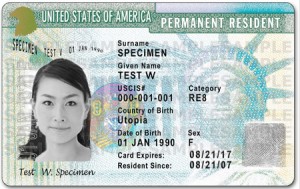
    Clients who file their permanent residency applications through Fong & Chun, LLP are always advised to use employment authorization and advance parole (often referred to as "travel permit") documents with caution. As of February 11, 2011, USCIS has begun issuing employment authorization and advance parole documents in ONE SINGLE CARD, and as a result, the attorneys at Fong & Chun, LLP are concerned that applicants for permanent residency do not utilize the card without a careful analysis of whether using the card might jeopardize their current status or prevent them from re-entering the US after traveling abroad!Screen shot 2011-02-15 at 12.59.51 PM.png

    For many applicants who are applying for greencards through employment, using an employment authorization card with a company other than the sponsoring employer can be a violation of the applicant's current non-immigrant visa status. In some cases, this can result in a denial of the entire adjustment of status application!

    It is very common for some applicants to be granted the advance parole document by USCIS, although leaving the country, even with the advance parole in hand, could bar them from re-entering. This scenario is typical for those who face the 3 or 10 year bar because of unlawful presence. Please contact the attorneys at Fong & Chun, LLP if you or someone you know is applying for permanent residency. ---ecf